

Victims’ Advocacy
Enacted in 2022, the Homicide Victims’ Families’ Rights Act of 2021 (Public Law 117-164), grants immediate family members of homicide victims the right to request a formal review of federal cold case murder investigations. Upon request, the Act provides a case file review is conducted by investigators who were not previously involved in the case, evidence is reexamined, missed leads may be identified, and case files are updated to modern standards. If new, viable leads are uncovered, a reinvestigation is required.
A homicide case is eligible for review if it is:
1) More than three-years-old,
2) Was investigated by a federal agency, and
3) Has no identified perpetrator.
The Act also mandates:
1) Enhanced communication between law enforcement and victims' families,
2) Notification of families regarding their rights under the law,
3) Regular updates on review progress and case status, and
4) Publication of federal cold case murder statistics by the U.S. Department of Justice (DOJ).
While the Act represents meaningful progress, advocates believe it does not yet go far enough. Additional legislative enhancements and dedicated funding are needed to ensure the law achieves its intended impact for families seeking answers.
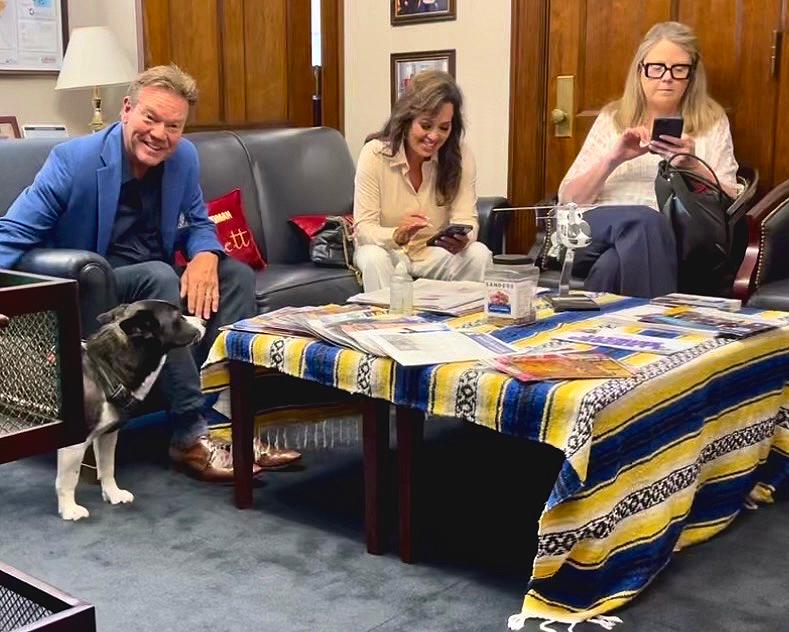
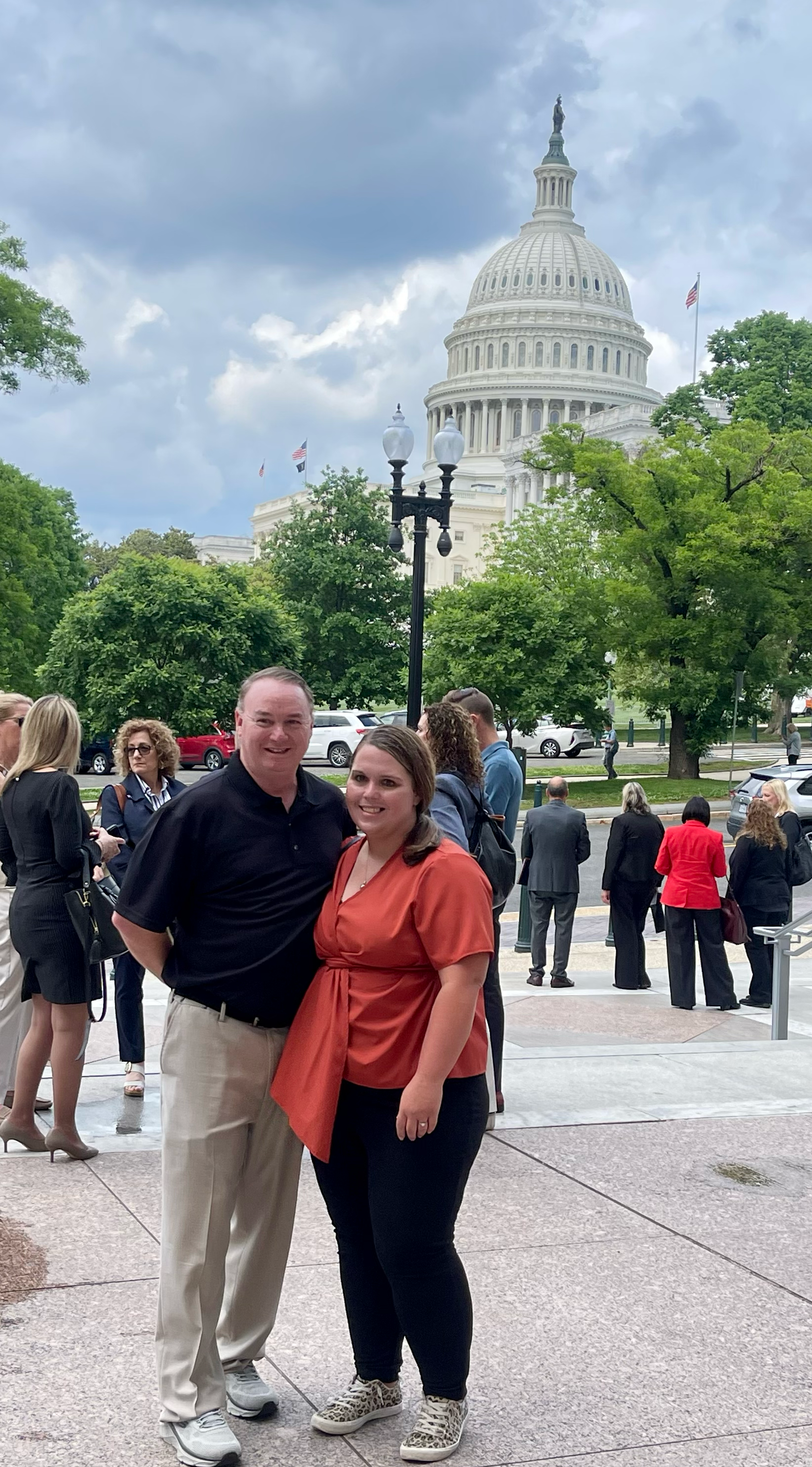
In May 2024, Nashville-based private investigator and founder of the Without Warning® podcast Sheila Wysocki organized a bipartisan advocacy trip to Capitol Hill to address the Act’s shortcomings and request stronger support. She was joined by Rae Andreacchio (mother of Christian Andreaccio*), Pamela Crews (mother of Jonathan Crews*), Jana Guyewski Lautigar (sister of Crystal McCrory*), Sherry and Michael Smith (mother and stepfather of Lauren Agee*), and Kimberley Skubic. Each participant traveled at their own expense in a unified effort to encourage lawmakers to revise and strengthen existing statutes, ensuring families receive:
1) Timely access to cold case information,
2) Greater investigative resources, and
3) Meaningful, ongoing support throughout an often grueling and heartbreaking process.
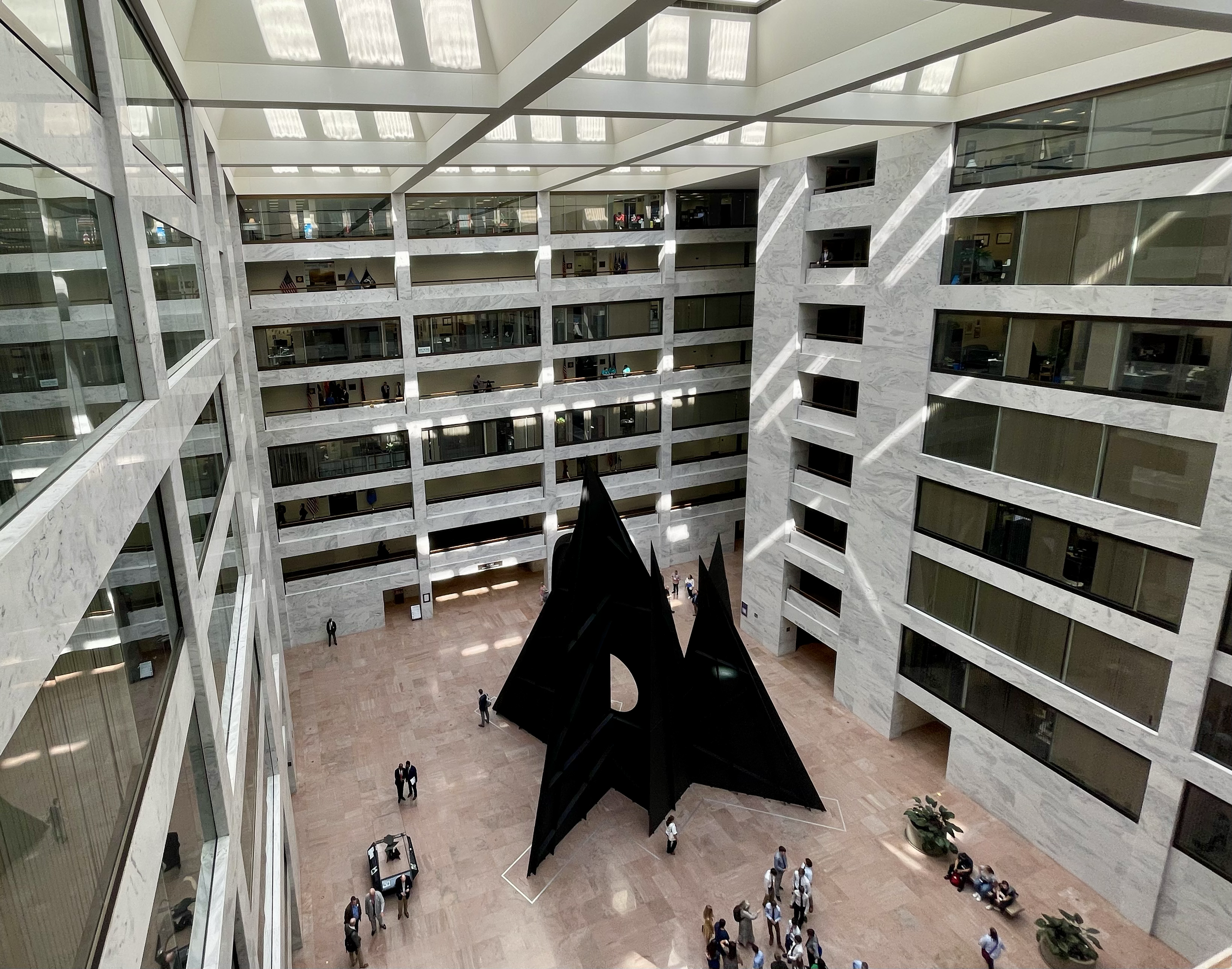
Over two days in Washington, D.C., the group met with lawmakers and officials from offices of:
Senator Bill Cassidy (Louisiana)
Senator Cindy Hyde-Smith (Mississippi)
Senator Marsha Blackburn (Tennessee)
Senator John Cornyn (Texas)
Congressman Mike Ezell (Mississippi)
Congressman Michael Guest (Mississippi)
Congressman Trent Kelly (Mississippi)
Congressman Scott DesJarlais M.D. (Tennessee)
Congressman Mark Green (Tennessee)
Congressman Andy Ogles (Tennessee)
Congressman Colin Allred (Texas)
Congresswoman Jasmine Crockett (Texas)
Discussions focused on strengthening the Homicide Victims’ Families’ Rights Act of 2021 and improving future legislation to better serve victims’ families nationwide. The effort to refine and enhance the law continues.
*Case information for Lauren Agee, Christian Andreacchio, Jonathan Crews, Crystal McCrory Jones, as well as The Yogurt Shop Murders, below.
In the Media
Victims’ Advocacy Trip to D.C.—May 6-8, 2024







Lauren Agee
Smithville, Tennessee
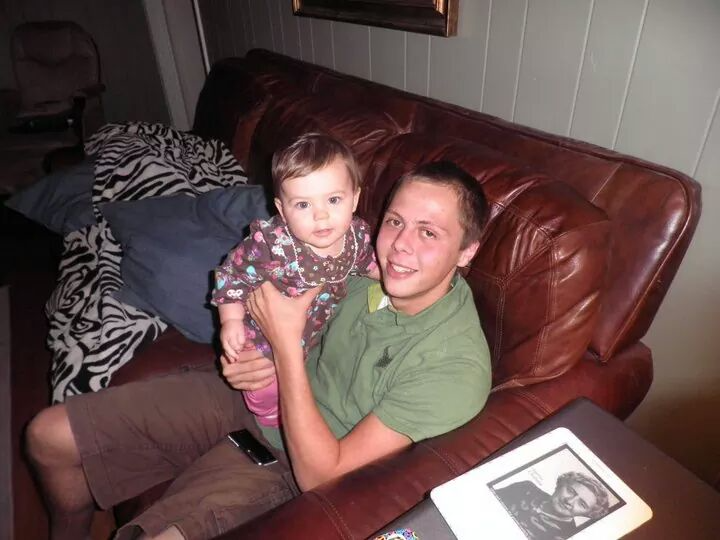
In late July 2015, Lauren Agee, 21, went to Wakefest, a three-day wakeboarding tournament at Center Hill Lake in Smithville, Tennessee, with friends Hannah Nicole Palmer, Aaron Lilly, and Christopher Stout. Brixner Gambrell met and joined them there. The five chose to set up camp on a plateau, 90 feet above the lake.
After spending the day at the lake for Wakefest activities, Lauren returned to camp and slept there Saturday night; she was missing Sunday morning. Around 4 pm Sunday, two fisherman found Lauren dead, floating face down in a cove.
Dekalb County Sheriff conducted a brief investigation ultimately concluding Lauren died by accident. Suspicion fell upon her friends due to changing stories and questionable behavior.
In 2017, Sherry Smith, Lauren’s mother, filed a wrongful death lawsuit alleging Hannah Palmer, Aaron Lilly, Christopher Stout, and Brixner Campbell killed Lauren through their “intentional, negligent or reckless acts.” In 2018, the case was dropped to avoid a judge’s gag order that would have halted investigations.
The case is still officially listed as an accident. Lauren’s family maintains she did not fall from the cliff.
Private investigator Sheila Wysocki continue to advocate for a a new investigation.
In the Media


Meridian, Mississippi
Christian Andreaccio
Christian Andreacchio was a 21-year-old tugboat deckhand who was found dead on February 26, 2014, in the bathroom of his apartment in Meridian, Mississippi, from a gunshot wound to the head. The Meridian Police Department ruled his death a suicide the same day after a brief on-scene investigation.
Christian was discovered kneeling beside his bathtub with his upper body slumped forward. His girlfriend, Whitley Goodman, and friend, Dylan Swearingen, were present at the apartment that morning. Swearingen called 911. Both Goodman and Swearingen were publicly associated with the case and persons of interest.
In 2017, a grand jury reportedly considered evidence in the case but did not return indictments against either individual. No homicide charges have ever been filed.
The case has been reviewed by additional local MS law enforcement leadership, MS Bureau of Investigation, Independent forensic experts, private investigators, and attorneys representing Christian’s family. Arrest warrants were reportedly issued at one point but later revoked. The case was referred to the Mississippi Attorney General’s Office; however, no prosecution followed.
Christian’s family has consistently disputed the suicide ruling, alleging investigative failures and possible misconduct. Questions have focused on crime scene processing, gunshot residue evidence, trajectory analysis, and the speed with which the death was classified.
The case gained national attention through Season 1 of the Culpable podcast and other media coverage, which highlighted perceived inconsistencies and renewed public scrutiny.
As of now, the official manner of death remains suicide, and no one has been criminally charged in connection with Christian’s death. The case continues to be the subject of public debate and advocacy efforts by his family.
In the Media


Jonathan Crews
Coppell, Texas
On February 2, 2014, Jonathan Crews died in his bed by a single gunshot wound to the chest. A weapon was found by his side. Jonathan’s girlfriend Brenda Lazaro was present inside his Coppell, Texas, apartment at the time of the shooting; she claimed Jonathan died by suicide. Manner of death was ruled undetermined. No suspect has been officially named.
In 2016, the Crews' family filed a civil suit against Brenda Lazaro, alleging she shot and killed Jonathan in a jealous rage. Thomas Shaw, attorney for the Crews’ family, asked for $129 million in damages.
In 2022, the jury unanimously agreed Jonathan’s death was most likely a homicide at the hands of Brenda Lazaro, awarding Jonathan’s family $206 million in damages.
No one has been criminally charged for the homicide of Jonathan Crews.
Crowdsourcing Justice™ for Jonathan Crews: Join the Investigation, Make a Difference
'He broke her heart … that's exactly where she was aiming': Texas family, PI believe jealous girlfriend shot son
How Did Jonathan Crews Die? Who Killed Jonathan Crews?
Jonathan Crews: How Did He Die? Who Killed Him?
Preview: Dateline Episode (Behind Door 813)
What happened to Jonathan Crews? Details explored ahead of Dateline: Secrets Uncovered on Oxygen
In the Media
“Final Judgment (Episode 18, Season 7)” of Sheila Wysocki’s podcast Without Warning examines civil trial verdict in the Jonathan Crews case. Episode 18 discusses the civil trial verdict.


Crystal McCrory Jones
Oak Grove, Louisiana
On February 9, 2023, Crystal McCrory Jones, a 43-year-old woman in Oak Grove, Louisiana, was found dead inside her home from a single gunshot wound to the head. Law enforcement quickly ruled her death a suicide, declaring it as such within roughly one to two hours at the scene. Crystal was found lying on the bed with a pillow over her face and a handgun in her hand, leading investigators to conclude self-inflicted gunshot wound early in the process.
Crystal’s family disputes the suicide ruling and says there are significant discrepancies in the investigation citing:
1) Crystal’s husband, Tony Joe Jones, who was a reserve deputy with the West Carroll Parish Sheriff’s Office, called for the welfare check and was interviewed for only a few minutes before authorities labeled it a suicide — raising conflict-of-interest concerns,
2) Reported inconsistencies about when Crystal died, where Tony was that day, and whether key investigation steps were skipped (like thorough ballistics, gunshot residue testing, more extensive crime scene photos, or neighbor interviews),
3) The spent shell casing from the gun was not initially reported found at the scene — only later reported to be found by Crystal’s husband Tony,
4) Photographs the family says show bruising and injury marks — which could indicate a struggle — were not referenced officially, and the medical examiner described them as normal post-mortem effects, and
5) Crystal was cremated quickly after her death, which her family says limited independent forensic analysis.
Today, the official classification remains suicide per local authorities; there’s no public record of a reopened criminal investigation by state or federal law enforcement. The sheriff’s department continues to stand by its conclusion. No official re-examination or change in classification has been announced by law enforcement.
Crystal’s family has not accepted the ruling and continues to publicly call for a new and independent investigation, citing perceived gaps and errors in how the original investigation was handled. A petition to reopen the case has gathered thousands of signatures from supporters demanding accountability and a fresh look.
In the Media

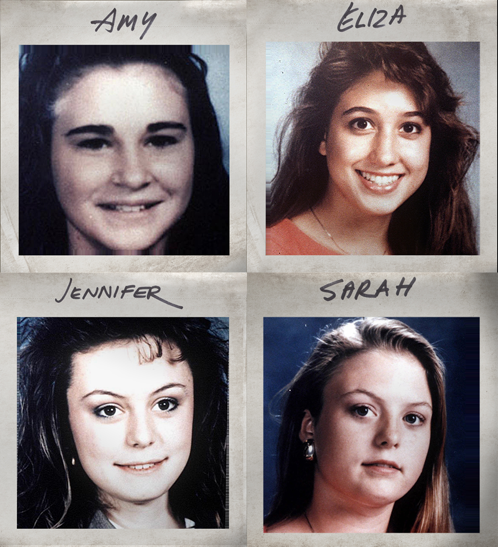
The Yogurt Shop Murders
Amy Ayers, Jennifer Harbison, Sarah Harbison, Eliza Thomas
Austin, Texas
On December 6, 1991, four young girls were murdered in the "I Can't Believe it's Yogurt" shop in Austin, Texas. Complete innocents, sisters Sarah (15) and Jennifer Harbison (17), Amy Ayers (13), Eliza Thomas (17), were simply at the wrong place at the wrong time.
In 1999, four men were arrested as suspects: Maurice Pierce, Forrest Welborn, Michael Scott, and Robert Springsteen IV. Scott and Springsteen IV were convicted and served prison time before the convictions were overturned in 2009 after the US Supreme Court ruled the use of their alleged confessions violated the Confrontation Clause* of the US Constitution.
In 2025, DNA identified a sole person as the killer. Through a struggle with 13-year-old Amy Ayers, the killer left his DNA under her fingernails and facilitated the identification. Robert Eugene Brashers, a rapist and serial killer, was the sole perpetrator.
DNA now links Brashers to eight murders from 1990-1998.
The Texas government is taking steps to clear the names of wrongfully convicted Michael Scott and Robert Springsteen IV.
*The Confrontation Clause, found in the Sixth Amendment of the U.S. Constitution, guarantees defendants in criminal prosecutions the right to confront and cross-examine witnesses against them.
The HBOMax four-part documentary series, “The Yogurt Shop Murders,” originally aired in August 2025.